

 Published: 15 Aug 2026 | Updated: 21 Oct 2026


House edge is the mathematical advantage a casino game has over players over a large number of outcomes. It is built into the rules and probability structure of the game.
This does not mean the online casino controls or chooses every individual result. Instead, the game's design gives the house a statistical advantage when outcomes are considered over a sufficiently large number of plays.
House edge should therefore not be confused with a guarantee that the casino will win every individual game. Random results can produce different short-term outcomes, including outcomes that favour a player. The house edge describes the underlying mathematical relationship between possible outcomes rather than predicting what will happen next.
For players using an online casino like Genting Casino, understanding this distinction is important because randomness and house advantage are separate concepts. Dive deeper into this through the following points:
- How Does RNG Work?
- How Do RNG and House Edge Work Together?
- Can a Random Game Still Favour the House?
- Does RNG Change the House Edge?
- What Can Players Learn From RNG and House Edge?
How Does RNG Work?
A random number generator, or RNG, is a system designed to produce sequences of numbers or values that are unpredictable.
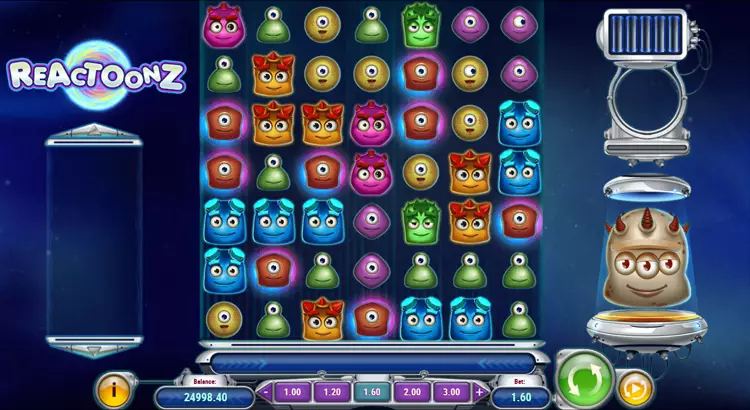
In casino software, the RNG can provide the random input used to determine game outcomes. The exact way this works depends on the game, but the central purpose is to prevent the next outcome from being reliably predicted from previous ones. You may observe these when you play games like online slots at licensed casinos.
For gambling products regulated by the UK Gambling Commission (UKGC), random outcomes must meet technical requirements for acceptable randomness. The UKGC states that RNG outputs should be unpredictable and appropriately distributed, with testing used to assess whether they meet the required standards.
An RNG therefore addresses how an outcome is generated. It does not determine whether the underlying game gives the player or casino a mathematical advantage.
|
Genting Casino Tip: When assessing a casino game, treat randomness and house edge as two different questions: "Are the outcomes generated fairly?" and "What mathematical advantage is built into the game's rules?" |
How Do RNG and House Edge Work Together?
RNG and house edge can work together because they serve different purposes.
The RNG determines which outcome occurs from the available possibilities. The game's rules determine how those outcomes are valued and how frequently different results can occur.
A game can therefore use a properly tested RNG while still having rules that favour the house mathematically.
This is not automatically evidence of an unfair or manipulated RNG. A regulated game can be random while its mathematical design gives the casino an advantage over the long term.
This distinction is important because a player's experience of losing does not necessarily indicate that the RNG is faulty. Likewise, a short winning streak does not mean the house edge has disappeared.
Can a Random Game Still Favour the House?
Yes. Randomness and equal chances are not the same thing.
A random system can select outcomes unpredictably, while those outcomes have different probabilities or values.
This is why it is misleading to assume that a game being "random" means players and the casino have exactly equal chances.
The RNG's role is to make the relevant outcome unpredictable. The house edge comes from the game's mathematical structure.
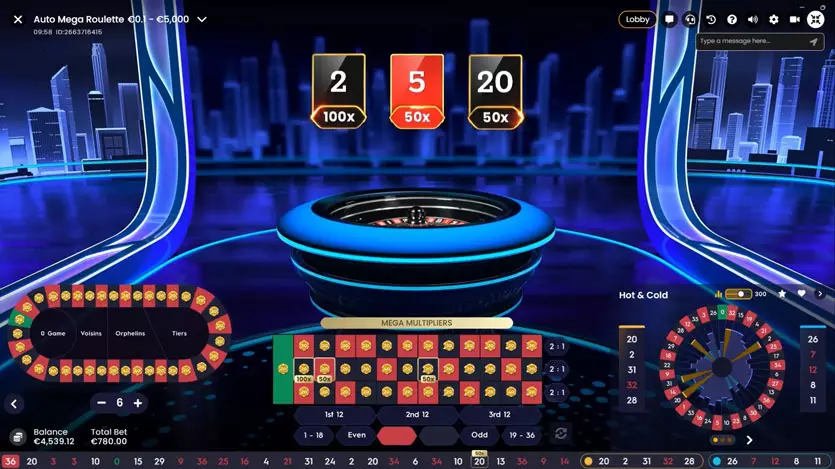
This also helps explain why previous results, like those recorded in live roulette games, do not normally provide a reliable way to overcome the house edge. If the RNG is designed correctly, a previous outcome should not make a future result more likely simply because a particular result has not appeared recently.
Does RNG Change the House Edge?
The RNG itself does not normally create the house edge.
Instead, the house edge comes from the game's rules, probabilities and payout structure. The RNG is responsible for generating the random outcome within that framework.
A properly implemented RNG should produce outcomes in accordance with the game's design. If the game is designed with a mathematical house advantage, random generation does not remove that advantage.
Players should therefore avoid claims that a particular sequence, timing or pattern can reliably change the underlying mathematics of a game.
What Can Players Learn From RNG and House Edge?
Understanding these concepts can help players interpret casino results more realistically.
|
Concept |
What it means |
|
RNG |
Generates random and unpredictable outcomes |
|
House edge |
The mathematical advantage built into a game's rules |
|
Random outcome |
A result that cannot reliably be predicted in advance |
|
Short-term result |
An individual outcome or small sequence that can vary significantly |
|
Long-term expectation |
The mathematical effect of the game's design over many outcomes |
The key point is that RNG fairness and house advantage should not be treated as competing explanations for the same thing.
For a live casino, the situation can be different because outcomes may be determined through physical equipment and live procedures rather than a software RNG. Players should check the rules of the specific product to understand how its outcomes are generated.
Random Does Not Mean Equal
RNG and house edge describe two different parts of how casino games work. The RNG is responsible for generating random outcomes, while the house edge comes from the mathematical structure of the game.
For players researching how gambling products work, Genting Casino believes clear information is important. Understanding the difference between RNG fairness and house advantage can help people make more informed decisions without assuming that random outcomes can be predicted or controlled.
Ultimately, knowing how mathematics works does not remove the uncertainty of gambling. If you choose to participate, keep responsible gambling at the centre of your decisions and remember that outcomes cannot be guaranteed.
|
Understanding house edge should never be treated as a reason to gamble more or attempt to overcome mathematical probabilities. Responsible gambling means treating gambling as entertainment rather than a way to make money or recover losses. Set limits that are appropriate for you, take regular breaks and avoid chasing losses. If gambling becomes difficult to control or starts affecting your finances, relationships or wellbeing, consider using responsible gambling tools and seeking independent support. Remember that neither RNG knowledge nor an understanding of house edge can guarantee a particular result. |
FAQs
Does a fair RNG mean the casino has no house edge?
No. RNG fairness and house edge are separate. An RNG can produce fair, unpredictable outcomes while the game's rules still provide a mathematical advantage to the house.
Can RNG be used to guarantee a casino win?
A properly regulated RNG is designed to produce unpredictable outcomes, not guarantee a result for an individual game. The house advantage comes from the game's mathematical design.
Can players use previous RNG results to overcome the house edge?
Previous results should not provide a reliable way to predict the next RNG outcome. A properly designed RNG is intended to make future outcomes unpredictable.
Does house edge mean a player will always lose?
No. 'House edge' describes the mathematical advantage over many outcomes. Individual results can vary, and a player can experience wins or losses in the short term.
Is a live casino game affected by RNG?
It depends on the specific game. Some live casino products use physical equipment and live procedures to determine outcomes, while other elements may use software. The relevant game rules explain how its outcomes are determined.