

 Published: 21 Jul 2026 | Updated: 14 Sept 2026

Roulette has changed considerably since it first appeared in eighteenth-century France, but its earliest tables already contained many of the elements that define the game today.
Over time, improvements in craftsmanship, table layouts, and wheel design helped create a more consistent playing experience while preserving the core mechanics that have made roulette one of the world's most recognisable casino games.
Understanding how early roulette tables were designed provides valuable insight into the game's history. At Genting Casino, exploring the origins of classic table games offers a greater appreciation for their development while highlighting that roulette has always been a game based entirely on chance.
This online casino article will be covering the following points:
- The First Roulette Tables
- Early Wheel and Table Designs
- How Roulette Table Layouts Changed
- From Historic Tables to Modern Roulette
The First Roulette Tables
The first recognisable roulette tables appeared in Paris during the late eighteenth century. They typically featured a handcrafted wooden wheel positioned alongside a cloth-covered betting layout where players placed their wagers. These early tables combined elements from earlier wheel games with a structured betting area that closely resembled the foundations of modern roulette.
Unlike today's highly engineered equipment, early roulette wheels were produced by skilled craftsmen using wood and metal components. Although manufacturing methods were less precise than modern standards, these tables introduced the basic format that would continue evolving throughout the nineteenth century.
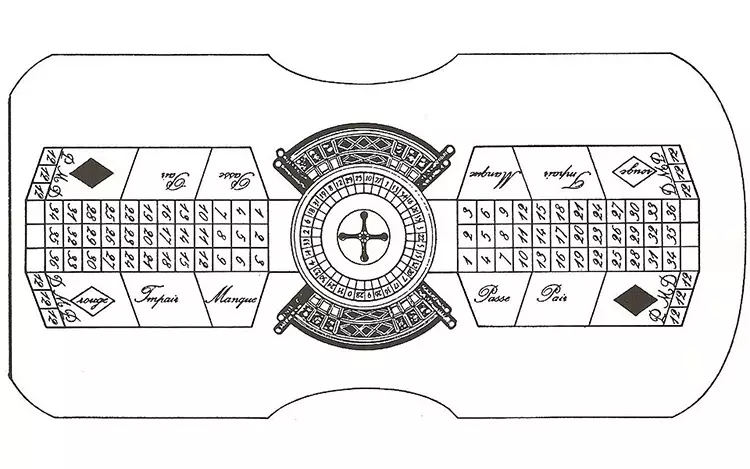
1800s engraving of the French roulette table
Early Wheel and Table Designs
The earliest roulette tables shared several distinctive characteristics.
|
Feature |
Early Design |
|
Wheel |
Handcrafted wood with metal spindle components |
|
Layout |
Cloth betting surface beside or around the wheel |
|
Number pockets |
Numbers 1 to 36 with zero pockets depending on the period |
|
Construction |
Individually built by craftsmen rather than mass produced |
|
Appearance |
Decorative wooden furniture designed for gaming salons |
Early roulette layouts already included many familiar betting options, including wagers on individual numbers and larger groups of numbers. However, one noticeable difference was that the zero and double-zero pockets were originally coloured red and black before later changing to green to distinguish the bank pockets more clearly.
As roulette evolved, table layouts became more organised and easier for both players and dealers to use. These refinements helped improve consistency without changing the game's essential format.
Today, players can enjoy roulette in both traditional settings and through online roulette platforms, where the classic table layout has been faithfully recreated in digital form.
|
Genting Casino Tip: Learning about roulette's original table designs can make the game more enjoyable to explore. While the equipment has evolved over time, every roulette spin remains completely random and independent of previous results. |
How Roulette Table Layouts Changed
During the nineteenth century, roulette tables became increasingly standardised as the game spread across Europe. Wheel construction improved through advances in engineering, while betting layouts became easier to read and more consistent between gaming venues. The introduction of the single zero wheel also influenced the appearance of many European tables.
French-style roulette tables were also distinctive because the wheel was often positioned in the centre, with betting layouts on both sides to allow multiple players to participate comfortably. Traditional French betting terminology remained printed on many tables, reinforcing the game's origins.
As technology advanced, physical roulette tables inspired digital versions that retained the same betting layout and wheel design. Modern live casino experiences recreate these traditional tables using high-quality streaming technology, while live roulette continues to preserve many of the visual features established centuries ago.
Alongside these developments, responsible gambling has become an essential part of today's regulated gaming industry, encouraging players to enjoy roulette as entertainment while staying within their personal limits.

From Historic Tables to Modern Roulette
Although roulette tables have become more sophisticated over the centuries, their overall appearance remains remarkably familiar. Modern materials, precision engineering, and digital technology have improved durability and presentation, but the core layout introduced in France continues to define the game.
Whether experienced at a physical table or through online roulette, today's players are interacting with a design that has evolved gradually rather than being completely reinvented. This continuity is one of the reasons roulette remains one of the casino industry's most enduring games.
The Lasting Influence of Early Roulette Tables
Early roulette tables established many of the design principles that continue to define the game today. From handcrafted wooden wheels to carefully arranged betting layouts, these early innovations shaped the roulette experience enjoyed by generations of players.
At Genting Casino, understanding the history behind classic table games offers a greater appreciation for their lasting appeal while reinforcing that every roulette spin is entirely based on chance.
|
Roulette's equipment has changed throughout history, but the game itself has always been based on random outcomes. No table design, wheel style, or historical knowledge can influence where the ball will land. If you choose to play, set personal spending and time limits, avoid chasing losses, and treat roulette purely as entertainment. Roulette is only suitable for players aged 18 and over. |
FAQs
What did the earliest roulette tables look like?
Early roulette tables featured handcrafted wooden wheels, cloth betting layouts, and numbered pockets that formed the basis of the modern game.
Were early roulette tables the same as today's?
No. While the overall concept was similar, early tables used handcrafted materials, different pocket colours for the zero sections, and less standardised layouts.
Why did roulette table layouts change over time?
Advances in manufacturing and the growing popularity of roulette led to more consistent wheel construction and betting layouts that were easier to use.
Did early roulette tables use the same betting layout?
Many of the familiar betting options already existed, although the layout gradually became more refined and standardised over time.
How do modern roulette tables compare with early designs?
Modern roulette tables use precision engineered equipment and advanced technology, but they retain the same basic wheel and betting layout introduced more than two centuries ago.